
'The impact of CBDC on deposits and deposit insurance is largely unknown.'

RBI governor highlights the role of fate in his career at a meeting of the IIM-A alumni.

The Winter Session of Parliament is likely to witness a united opposition piling up pressure on the government on a plethora of issues like the exit of the RBI Governor, rumblings in the CBI and Rafale deal, while parties like Shiv Sena are set to make a renewed pitch for Ram temple in Ayodhya.
The Winter Session of Parliament is likely to witness a united opposition piling up pressure on the government on a plethora of issues like the exit of the RBI Governor, rumblings in the CBI and Rafale deal, while parties like Shiv Sena are set to make a renewed pitch for Ram temple in Ayodhya.
The Winter Session of Parliament is likely to witness a united opposition piling up pressure on the government on a plethora of issues like the exit of the RBI Governor, rumblings in the CBI and Rafale deal, while parties like Shiv Sena are set to make a renewed pitch for Ram temple in Ayodhya.
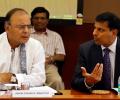
Monetary transmission has been an issue for the Indian banking sector.

Finance Minister Nirmala Sitharaman on Tuesday asked banks and other financial institutions to ensure that their customers must update nominees to help resolve the problem of unclaimed money in future. "I want the banking system, the financial ecosystem including the mutual funds, stock markets to keep in mind that when someone deals with his (customer's) money, the organisations will have to think about the future and ensure that customers nominate their heirs, give the name and address," Sitharaman said speaking at the Global Fintech Fest (GFF) in Mumbai. According to a report, the banking system alone has more than Rs 35,000 crore of unclaimed deposits, while the overall quantum of the unclaimed money is said to be more than Rs 1 lakh crore.

Reserve Bank of India Governor D Subbarao has said India, being a current account-deficit country, is more vulnerable to sudden reversals in capital flows and short-term overseas portfolio money than nations which have a current account surplus.

He will be the eighth Deputy Governor to be made Governor at RBI
With RBI governor Duvvuri Subbarao retiring in September, 2013, the government is on the look out for the most eligible person to head the Reserve Bank of India.
While the common citizen will benefit from the central bank's action, the policy stance is consistent with sustaining high growth in the medium term.

Even as the high inflation figure for October has ruled out any possibility of a rate cut by the Reserve Bank of India's (RBI's) monetary policy committee (MPC) in December, a rate cut in February also looks uncertain due to global uncertainties. Economists told Business Standard that unless domestic growth slows markedly, the outlook on rate cut remains unclear. India's headline inflation touched a 14-month high of 6.2 per cent in October, breaching the MPC's upper tolerance band of 6 per cent.
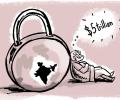
India decisively withstood global headwinds in 2023 and is likely to remain as the world's fastest-growing major economy on the back of growing demand, moderate inflation, stable interest rate regime and robust foreign exchange reserves. Despite widespread pessimism witnessed among the developed nations and the worsening geopolitical situation, India recorded a gross domestic product (GDP) expansion of 6.1 per cent in the March quarter. The growth moved up to 7.8 per cent in the June quarter and was 7.6 per cent in the September quarter. For the first six months of this fiscal, the growth was 7.7 per cent.
Making it easier for urban cooperative banks to extend housing loans, the Reserve Bank of India has relaxed the risk provisioning norm for purchase of residential properties up to Rs 30 lakh (Rs 3 million).
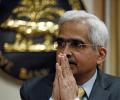
200 staffers, consisting of RBI officials and support teams, who are essential to perform critical functions, were isolated at a separate facility in a dedicated quarantined environment near all three RBI data centres.
Reserve Bank of India Governor Y V Reddy on Tuesday said the Indian economy is largely insulated from episodes of global financial instability and the country has built resilience to shocks and is less vulnerable to output volatility.\n\n
There are however, enough dovish signals in the governor's statement to indicate a pro-growth policy going forward.

The three day MPC meeting began on Monday and the decision will be announced on Wednesday by RBI Governor Shaktikanta Das.
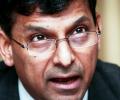
The central bank kept cash reserve ratio unchanged at 4 per cent.
While India has in no way contributed to global financial imbalances, it has a huge stake in the process of unwinding of these imbalances and its impact on exchange rates, former Reserve Bank of India governor Y V Reddy has said. He was speaking at the Indian Council for Research on International Economic Relations.
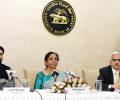
Bad loans of PSBs are at Rs 20 trillion. Most of it is, I sense, due to corruption and behest lending. Nobody pays a price for this charade. Not the promoters, the bankers, RBI officials, finance ministry bureaucrats or politicians, points out Debashis Basu.
The central bank says that there is room for policy action, but warns of persistent inflation risks.
Reserve Bank of India Deputy Governor K C Chakrabarty has called for changes in the rating and reporting standards of banks, saying a bank should not be rated just on the basis of its net interest margin and net profit, but from a non-financial angle too.

In order to further enhance customer convenience, and to leverage the 24x7 availability of real-time gross settlement (RTGS), NACH which is currently available on bank working days, is proposed to be made available on all days of the week effective from August 1, 2021, RBI's Shaktikanta Das said.

Reserve Bank of India Governor D Subbarao on Friday increased mandatory cash reserve of banks held by RI by 75 basis points (0.75 per cent) in a bid to suck excess liquidity to combat rising inflation.
Reserve Bank of India Governor YV Reddy has said that Indian financial market is not vulnerable to overseas development. The Indian financial sector is likely to be less affected by the contagion than most other emerging market economy (EMEs), in respect of first-round or direct effects. The Indian equity markets have been volatile in recent months and that has some impact on changing sentiments. He said India has not been contributing in the global macro economic imbalances.

Prime Minister Narendra Modi and Congress leaders Sonia Gandhi and Mallikarjun Kharge were among the top leaders who paid homage to former prime minister Manmohan Singh at his home in New Delhi on Friday.
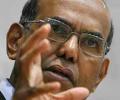
Even as the deficits on fiscal and current account fronts have been building up, it is highly unlikely that the country could witness the repeat of the 1991 economic crisis that was caused by similar factors, said Duvvuri Subbarao, Governor of the Reserve Bank of India (RBI) on Thursday.
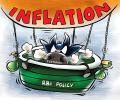
Amid a debate on the basis of a monetary policy stance, one may be curious enough to know how non-food retail inflation has behaved over the years in India. Let the eager souls catch a glimpse of facts. In the past 10 years, non-food inflation came down below 4 per cent on two occasions - pre-Covid period of 2019-20 and now in the first four months of the current financial year (FY25).
The criticism of the RBI governor's handling of inflation is fraught with an oversimplification of the current inflation dynamics.

The Delhi Commission for Women has issued a notice to Indian Bank seeking withdrawal of its new recruitment guidelines which prevents a woman, who is three or more months pregnant, from joining service.
The appointment of a deputy governor to the country's central bank has always been surrounded by controversy. And this time is no exception. One of the Reserve Bank of India executive directors, C Krishnan, who was called to an interview for the post, has declined to appear before the search committee. The interview was scheduled for September 9.

As the central bank continues to increase forex reserves by running down the forward book which totalled $42 billion as of end-July, signalling its strong resolve to build a bigger reserve cushion to aid its expansionary, unorthodox monetary policy, the reserves are set to top the $655-billion-mark by March, according to a report. The forex kitty declined by $2.10 billion to $619.36 billion for the week to August 13 due to a fall in the core currency assets and gold, showed the latest RBI data. The reserves had risen to a lifetime high of $621.46 billion in the previous reporting week ending August 6.
His comments poured cold water on hopes that the central bank may have a rethink on rates after the wholesale price index, the main inflation gauge, rose a lower-than-expected annual 7.25 per cent in June, its slowest rise since January, helped by moderation in fuel prices.

The majority view remains for the central bank to leave the cash reserve ratio unchanged at 4 per cent.

What is killing the risk appetite of the bond buyers is the inconsistency in the central bank's approach. It needs to allow the yield to find its own level, gradually. To ensure that, the RBI may adopt a similar approach with which it handles a slipping rupee, asserts Tamal Bandyopadhyay.
The RBI targets inflation at 6 percent by January 2016 and 4 percent for 2017/18.

He will take the place of Subir Gokarn, who was in-charge of the monetary policy department, has retired.
India will become the world's third largest economy by 2026 as its GDP in current dollar terms will reach $5 trillion in that year and further rise to $5.5 trillion in 2027, former Niti Aayog vice chairman Arvind Panagariya said on Friday. Delivering the 18th C D Deshmukh Memorial Lecture titled 'India at 125: Reclaiming the Lost Glory and Returning the Global Economy to the Old Normal', he said it is unlikely that GDP in current dollar terms of either Germany or Japan will cross $5 trillion-mark in the coming three years. Japan will have to sustain a growth rate of 3.5 per cent in current dollar terms to reach $5.03 trillion in 2027 from its 2022 level of $4.2 trillion, he said.
